
Why Oneonta Homeowners Choose Culligan For Well Water Treatment
Our systems are second to none. The real advantage is that we make treating well water simple.
-
We Treat Your Water, Not A Category
Around Oneonta the question that decides everything is whether your well is down in the valley or up on the hill. USGS mapped 35 miles of valley-fill aquifer here, up to 400 feet thick under the city, and those wells produce hundreds of gallons a minute of moderately hard water. Up in the uplands the fractured shale is the only option, it yields a fraction as much, and it comes with manganese, iron and sulfur instead of scale. Two very different systems. We start with a test and build the treatment around your actual numbers, which is why we won’t quote a system over the phone.
-
The Company That Drilled It Can Treat It
Most homeowners end up with a driller, a plumber, and a separate water treatment company, and when something goes wrong each one points at the others. We drill, pump, test, and treat. One number, one company, one answer.
-
Expert Installation, And We Maintain It
Culligan has been in water treatment for more than 85 years and it’s all we do. Your local Culligan delivers, installs, and maintains the system for you, so there’s no shipping damage, no unboxing, no guessing about install location, and no third-party service line when it needs attention. Schedule an appointment, then enjoy the water.
-
Make Your Water Work For You
On the fence about whether you need treatment? These are the returns that pay a system off over time.
- 24% in energy savings by using softened cool water to wash clothes
- 30% more life out of water-using appliances when contaminants are filtered out
- 50% reduction in detergent costs for laundry, hair, and body in soft water
- No more black or orange staining on fixtures and laundry
Local Resources
Oneonta Well Water
Why Are There Black Specks
In My Water?
Manganese, and it is the classic upland shale complaint in this county. USGS found manganese in Otsego bedrock wells at roughly sixty times the level in the shallow valley wells, with about one in four sampled wells above the staining threshold and some far higher. You see it as black or brown specks, dark staining in the toilet tank, and a metallic edge to the taste. It has a health-based standard in New York as well as an aesthetic one, so it is worth measuring rather than guessing at.
Why Does My Hot Water Smell
Like Rotten Eggs?
Hydrogen sulfide gas. USGS field crews noted the odor in eight of the fourteen bedrock wells they sampled across the upper Susquehanna basin, and rarely in the shallow valley wells. The Devonian shale under the uplands here is organic-rich, and that organic carbon plus sulfur minerals is exactly what sulfate-reducing bacteria need in oxygen-free groundwater. Heat drives the gas out of solution, which is why the shower is where you notice it. Sulfur filtration removes it.
How Hard Is Well Water Around Oneonta?
It depends which well you have, and the answer runs opposite to what most people assume. In USGS sampling, Otsego County valley sand-and-gravel wells came back harder than the bedrock wells, around 145 to 149 mg/L as calcium carbonate against roughly 96 to 100 for bedrock. In grains per gallon that is about 8 to 9 for a valley well against about 6 for an upland shale well. So a valley well near the Susquehanna is a routine softener candidate, and an upland shale well often isn’t. The city’s own supply is mostly surface water from Wilber Lake and the Lower Reservoir plus the Catella Park well, so it tells you nothing about yours. Hardness is what scales your heater, and the only way to know your figure is to test for it.
TREATMENT OPTIONS
Three Problems, Three Fixes For Your
Oneonta-Area Well
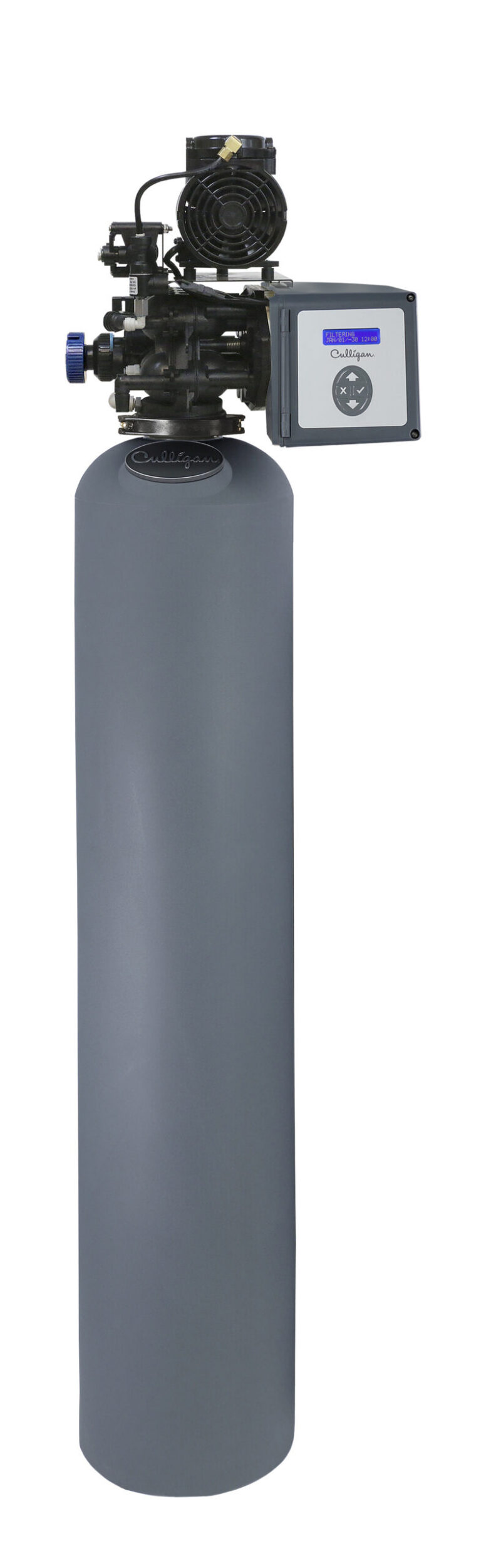
Iron, Manganese & Sulfur Filtration
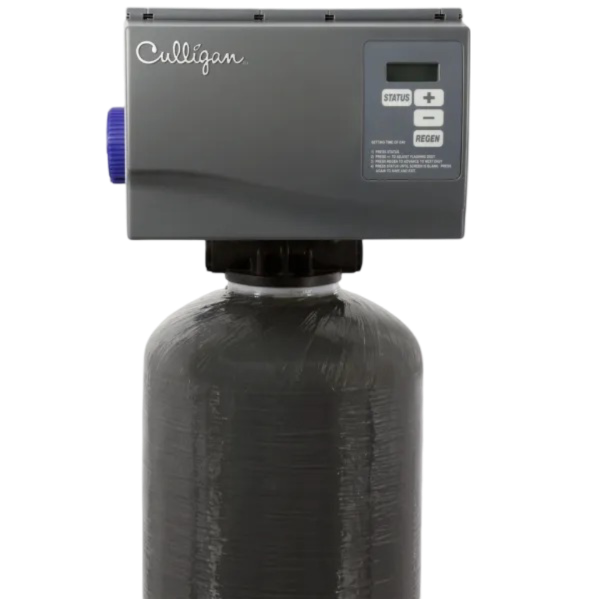
Water Softening
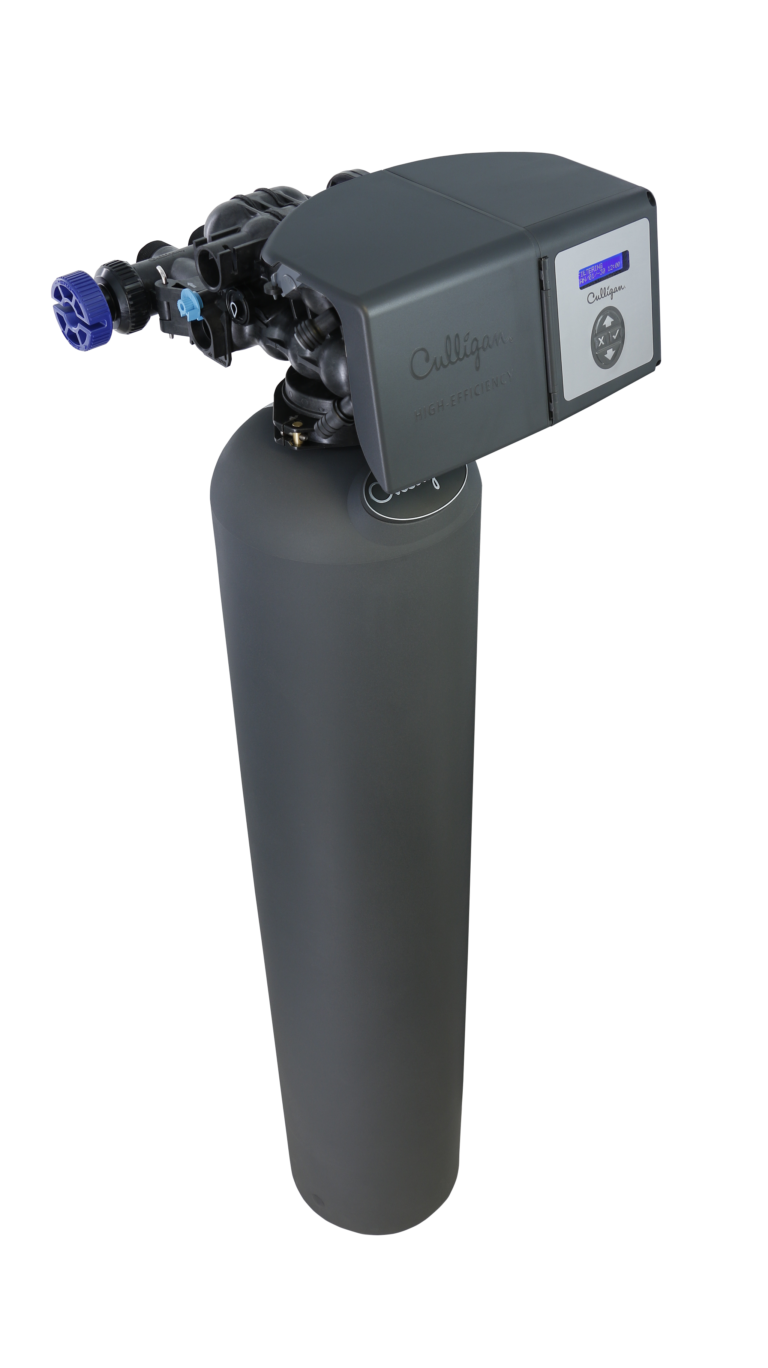
Drinking Water Systems
The Proof
Why Do Oneonta Homeowners TRUST Our
Well Water Treatment Systems?
My hair has never been softer, and I've noticed my skin is healthier. Thank you Culligan!

Working with Culligan has been nothing short of excellent. Very trusted, reliable, and they know what they are talking about when it comes to water treatment.
Our tap water has never tasted better. We feel better about drinking directly from the tap thanks to our under-sink reverse osmosis system!
Black Specks? Rotten Egg Smell?
Find Out What's Really
In Oneonta Well Water!
• Fast on-site results, no mailing
• We test manganese, iron, sulfur, hardness, and chloride
• Flexible sample pickup options

Frequently Asked Well Water Treatment Questions
We Have Answers
Valley well or hill well. Does it really make that much difference?
It makes most of the difference. USGS mapped the valley-fill aquifer through this area in detail: it reaches 400 feet thick beneath Oneonta and yields up to a thousand gallons a minute, while bedrock wells in the uplands are described as yielding only tens of gallons a minute and being the sole groundwater source up there. Valley wells run harder and pick up more from the surface. Upland shale wells run softer and pick up more from the rock. Different systems, genuinely.
Do I actually need a water softener here?
If you're on a valley well, probably yes, in the 8 to 9 grain range that a standard residential unit handles comfortably. If you're on an upland shale well, quite possibly not. We'd rather test and tell you that than sell you a softener that doesn't address what's actually bothering you.
Will my water taste salty?
No. A properly functioning water softener will never make your water taste salty. The small amount of sodium added is far too little to create a salty taste.
How does a water softener work?
Through ion exchange. As it removes the calcium and magnesium that make water hard, it replaces those ions one for one with sodium. The amount added is proportional to how hard your water is, and in most cases it isn't a significant contributor to the sodium in your diet.
Will a softener reverse damage already done to my appliances?
Yes. Once a softener is installed it begins removing the scale that hard water built up. It takes a long time to clear, but it will clear.
Are chemicals added to my water to soften it?
Other than salt or potassium chloride, no. A softener actually reduces the cleaning supplies and detergents going down your drain, which makes it a net positive environmentally.
How often do I need to add salt?
Modern softeners recharge based on how much water you use and how hard it is. Most of our customers add salt once or twice a year.
My well is near a salted road. Should I be worried?
Worth testing for, yes. Shallow valley-fill wells recharge quickly and sit close to the surface, which makes them the ones that pick up road salt. One 50-foot sand-and-gravel well USGS sampled in Otsego County came back at 201 mg/L chloride, approaching the drinking water standard, while deep bedrock wells in the same county sat near 6 mg/L. Chloride is a simple test and the difference between the two populations is stark.
Is my well water safe to drink without treatment?
Iron, manganese, sulfur, and hardness are mostly aesthetic and nuisance problems at typical levels, though manganese has a health-based standard in New York. Bacteria is the more common real failure here, and radon in water turns up above the proposed federal level in a majority of wells sampled across this basin. Start with a water test and we'll tell you honestly which category your results fall into.
How long does installation take?
Most residential systems install in a few hours in a single visit. We deliver the equipment, install it, and set it up, so there's nothing for you to unbox or assemble.
We're building a house. When should treatment be designed in?
As soon as the well is drilled and tested. Roughing in space and plumbing for treatment during construction costs far less than retrofitting it into a finished home.
Where should I get started?
Every recommendation we make starts with knowing what is in your water. The test is free, it happens at your house, and it takes about half an hour. You'll get your numbers explained in plain language and an honest answer about whether you need treatment at all.

Facebook